
IN-SEASON
TRAINING
For 50 years, Bigger Faster Stronger has argued that athletes should get stronger during the season — not just try to maintain. This is the definitive collection of BFS in-season training articles, tips and archived issues from the legendary BFS coaching staff.
CORE PRINCIPLES
Progress, Don't Maintain
Athletes should be stronger at the end of the season than at the beginning. Maintenance is a mindset that costs games.
Two Sessions Per Week
Train as soon after a contest as possible, then again 48–72 hours later. For high school football: Saturday morning and Monday.
Train in the Morning
Not before or after practice — mornings. It gives athletes time to recover and eliminates excuses.
Two Basic Workouts
Workout A: Box Squats, Towel Benches, Cleans. Workout B: Squats, Benches. 20–40 minutes each. One hour per week builds real strength in-season.
"IN-SEASON TRAINING"
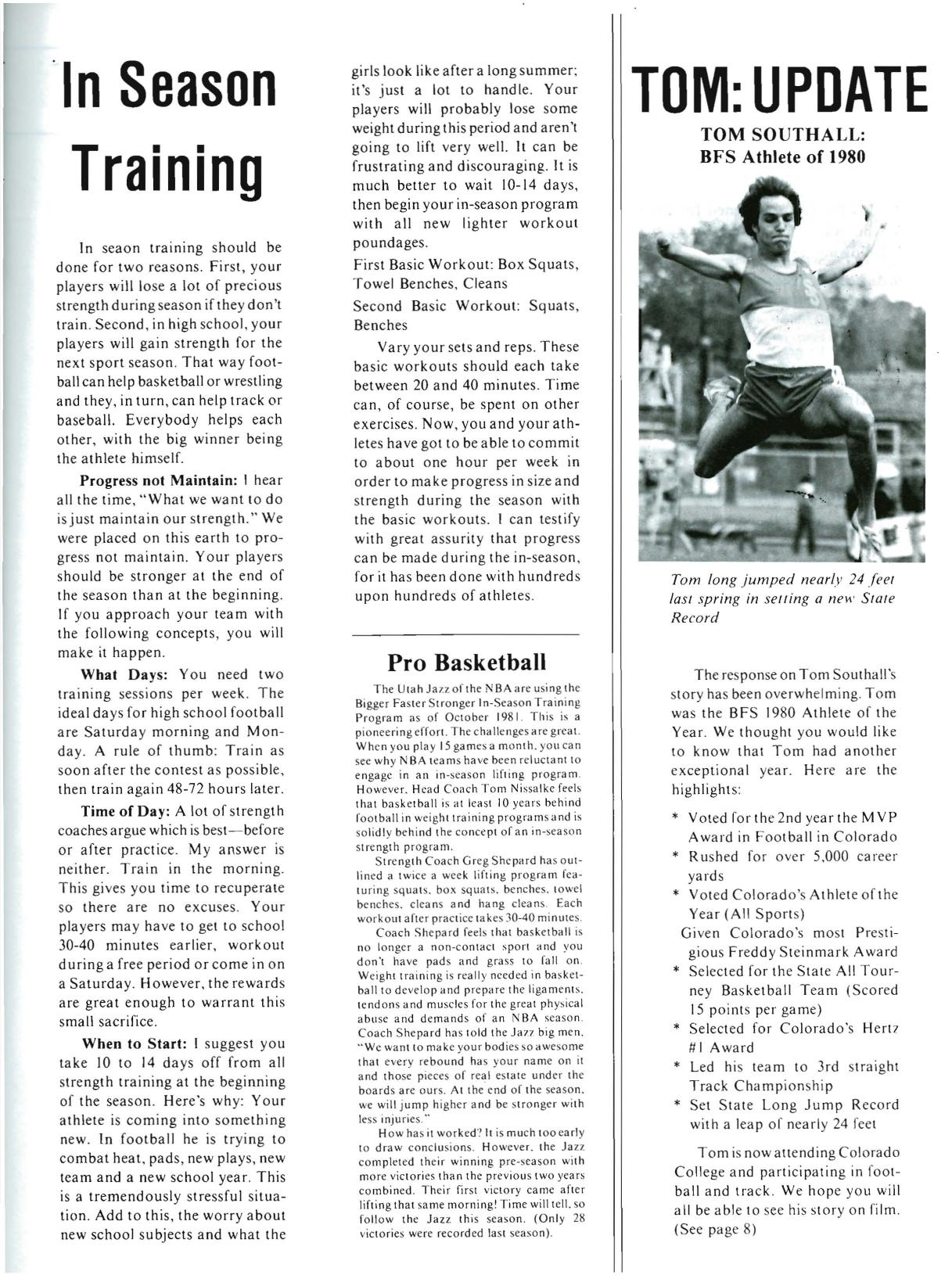
"We were placed on this earth to progress, not maintain. Your players should be stronger at the end of the season than at the beginning."
The article that put BFS in-season training on the map. It lays out the two-days-a-week framework, the case for morning workouts, and the 10–14 day off-ramp at the start of the season.
Also documents the pioneering October 1981 partnership with the Utah Jazz — the first NBA in-season lifting program of its kind, run twice weekly after practice with squats, box squats, benches, towel benches, cleans and hang cleans.
Bonus: Tom Southall — BFS 1980 Athlete of the Year — set a Colorado long jump state record at nearly 24 feet.
"IT'S PERFECT"
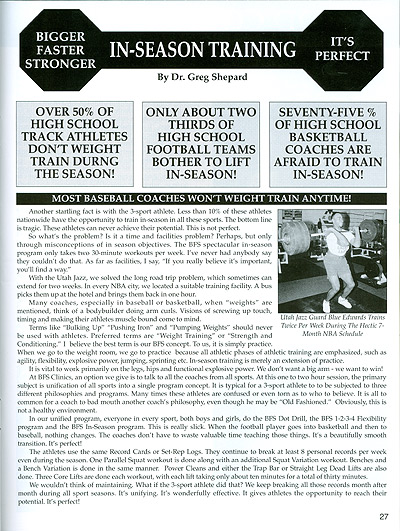
Featuring 7'4" Utah Jazz center Blair Edwards training twice per week during a hectic 7-month NBA schedule. The article demolishes "bulking up," "pushing iron," and "pumping weights" as in-season terms — replacing them with "Strength and Conditioning."
View Full Page ↗IN-SEASON TIPS
Take 10–14 days off from strength training at the start of the season — new plays, new team, heat and pads are stress enough. Restart with lighter poundages.
The 3-sport athlete needs in-season lifting the most — football helps basketball, basketball helps track, track helps baseball.
Reject the language of 'maintenance.' Progress is the standard. Hundreds of BFS athletes have proven strength gains during a season are possible.
Basketball is a contact sport without pads. Prepare ligaments, tendons and muscles for the physical demands — every rebound has your name on it.
Alternate two basic workouts: Box Squats / Towel Benches / Cleans, then Squats / Benches. Vary sets and reps. 20–40 minutes each.
The BFS Dot Drill, BFS 1-2-3-4 Flexibility Program, plyometrics, Power Cleans and Trap Bar / Straight Leg Dead Lifts belong in the in-season program.
RELATED ISSUES
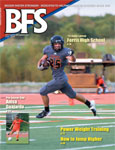
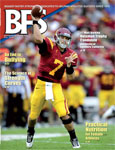
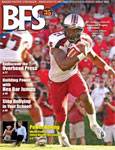
Winter and late-fall BFS issues have historically carried the deepest in-season training coverage. Open any cover to explore the full issue.







IN-SEASON ESSENTIALS
The best-selling BFS tools to plan, track and coach in-season training.
BFS Set/Rep Log Book
The classic log athletes use to record every set, rep and max in the weight room.
Buy Now ↗Women's Set/Rep Log Book
A dedicated log designed for female athletes tracking BFS in-season progress.
Buy Now ↗Readiness Record Book
Monitor recovery, readiness and workload so athletes peak on game day.
Buy Now ↗Be an 11 & Leadership Online Course
Build team captains and leaders who keep standards high all season long.
Buy Now ↗WRSC ONLINE
CERTIFICATION
Get certified in Weight Room Strength, Conditioning & Safety — the proven BFS Total Program, now available online. Get WRSC Certified at home, at school, or anywhere.
- High School Coaches building championship programs
- PE Teachers elevating their curriculum
- Athletic Directors standardizing training
- Administrators reducing weight room liability